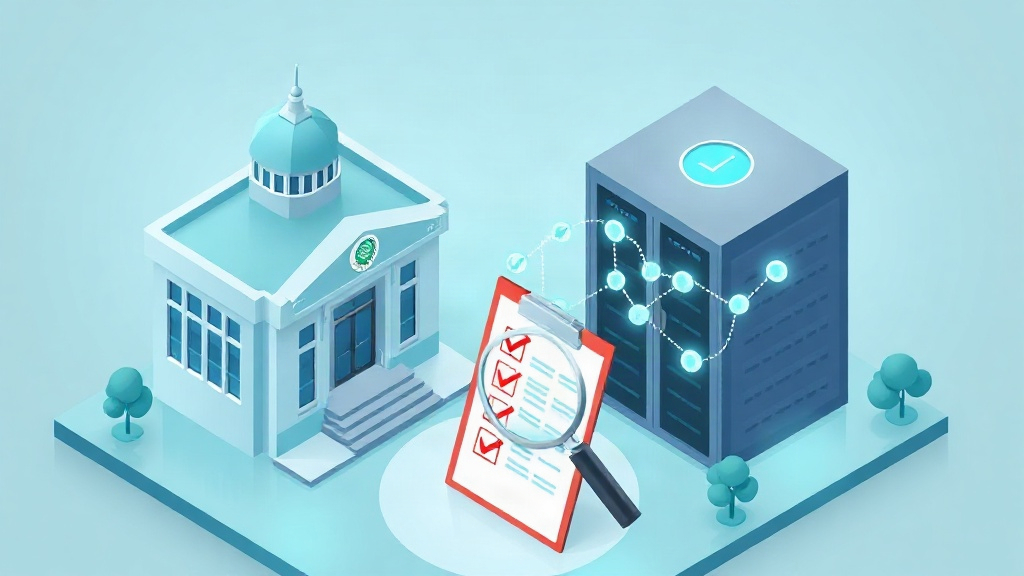


Quick Answer: Technology and compliance go hand in hand when data lineage, decision logging, and access controls are built into a system's architecture from the start. For government and regulated AI systems, this makes compliance easier to verify through actual system records rather than relying solely on vendor assurances and policy documents.
What Technology and Compliance Means for Regulated Organizations
Technology and compliance, taken together, describe a system where data lineage, decision logs, and access controls are built into the architecture, not attached at the end as a policy binder. An auditor should be able to reconstruct how a system reached a specific decision, who accessed what data, and when a model changed, without asking the engineering team to explain it in a meeting.
This definition shifts depending on the buyer. A government department answers to a different set of control requirements than a fintech lender, and the strictest applicable framework, not the average of the two, sets the real bar when a system serves both kinds of data.
Expert's Insight: Auditors increasingly need evidence they can independently examine and reproduce, rather than relying only on signed attestations. A statement that 'the system is compliant' carries more weight when supported by records showing which model version produced a particular output and what data informed that decision.
Compliance work also suffers from ownership gaps. A CTO thinks in terms of architecture, an IT director thinks in uptime and access, a program manager thinks in deliverables, and a compliance officer thinks in control families. Each defines "compliant" differently, and the system has to satisfy all four definitions at once.
Why Compliance Now Shapes Software Architecture Decisions
Compliance requirements increasingly influence architecture decisions before development begins. Rather than relying on screenshots or reports generated on request, organizations need systems that maintain records of important decisions, data access, and changes as part of their normal operation.
AI systems raise the stakes further. A model that cannot explain why it produced a particular output in the past is not a theoretical risk, it is an audit finding waiting to be written up.
Regulated buyers may also include specific control frameworks and security requirements in procurement contracts. These requirements can directly influence decisions about data storage, access permissions, infrastructure, and system architecture before development starts.
- Retrofitting logging and lineage after go-live typically means rebuilding data pipelines that were never designed to capture provenance.
- Designing these layers in from day one adds upfront engineering time but avoids a second build cycle later.
How Technology for Compliance Reduces Audit Risk
Technology for compliance reduces audit risk by replacing manual, after-the-fact evidence gathering with a continuous record generated as the system runs. Manual compliance processes break down in predictable places: spreadsheets tracking approvals, email chains standing in for sign-off records, and evidence assembled weeks after the event it describes, when memories and screenshots are the only source left.
Where Manual Compliance Processes Break Down
Spreadsheet-based tracking may show that an approval was eventually recorded, but not necessarily who approved a change or when it happened. Email approvals can get lost, forwarded without context, or never filed against the relevant decision. Evidence collected after the fact also depends on someone remembering to capture it before the underlying records become difficult to retrieve.
What an Audit-ready System Looks Like in Practice
An audit-ready system keeps immutable logs, versions every model deployed, enforces role-based access, and applies data residency controls at the infrastructure layer, not as a policy document describing intent.
Reality Check: Most "audit-ready" claims collapse at the first request to reproduce a specific automated decision from eight months ago. If the system cannot pull the exact model version, input data, and output for that single transaction, the claim was documentation, not architecture.
Evidence quality, not evidence volume, is what actually shortens an audit. A thousand pages of logs that cannot be queried by decision are worse than a hundred that can.
Building an Audit-Ready AI System That Meets Compliance Standards
Building an audit-ready AI system starts with the control framework, then the data model, then the application, in that order. Reversing that sequence means retrofitting controls onto a data model that was never designed to carry them.
Each pipeline needs instrumentation that captures input provenance, the model version used, the feature set applied, and a rationale for the output, recorded per decision rather than per batch job.
- Keep the audit trail in a separate store from the operational database, so the people running the system cannot edit the record of what it did.
- Design access controls around least privilege, and log every privileged action itself, not just the outcome of that action.
- Treat retraining, versioning, and rollback as compliance events with their own review step, not purely as engineering releases.
Skipping any one of these steps tends to surface later as a specific finding: an unexplainable decision, an untraceable access, or a model update with no corresponding control review.
Is NIST 800-53 a Compliance Standard AI Systems Must Follow?
NIST SP 800-53 is a catalog of security and privacy controls for information systems, including federal information systems. It is not a standalone law or certification. Depending on the agency, system classification, and applicable authorization requirements, AI systems deployed in government environments may need to demonstrate alignment with relevant control families, including access control, audit and accountability, and risk assessment.
Did You Know? NIST SP 800-53 does not offer a certification of its own. Organizations typically demonstrate alignment through control mapping, supporting evidence, and independent assessment where required. This is why a vendor's claim of being "NIST certified" deserves a closer look at what assessment actually supports it.
Mapping is not the same as certification. A usable mapping document names each relevant control family, states how the system satisfies it, and identifies the evidence an assessor can inspect, not just a checklist of control numbers marked "met."
When the same system also handles health or financial data, 800-53 does not replace sector rules, it sits underneath them as the security baseline those rules build on.
Compliance Requirements for AI Software in Government and Regulated Sectors
Compliance requirements for AI software vary by sector, but they compound rather than average out when a system serves more than one regulated domain.
| Sector | Core requirements |
|---|---|
| Government departments | Data security controls, data residency and access rules, auditability of automated decisions |
| Infrastructure authorities | Data integrity, traceability of predictive outputs, and appropriate oversight of safety-related decisions |
| Fintech, healthcare, legal | Sector-specific security, privacy data handling and record keeping obligations. |
| Cross-border deployments | Data residency, transfer restrictions, and rules governing where the data can be stored and processed. |
Different industries come with different compliance requirements. Government departments may have specific security and data residency obligations, while healthcare and fintech organizations have additional requirements around sensitive data and recordkeeping. Our work across multiple industries gives us an understanding of how these requirements can shape software development.
Where Compliance Programs Go Wrong After Go-Live
Compliance programs most often fail after go-live, not at design time. Teams treat the audit trail as a reporting feature generated on request, rather than part of the transaction path itself, which means it can lag or miss events entirely.
Model updates frequently ship without a corresponding control review, leaving the control mapping document describing a version of the system that no longer exists. A framework mapping completed at kickoff rarely still describes the system accurately twelve months later, once features, data sources, and models have changed.
Under-documented third-party components and external data sources are where most findings actually originate, because the organization's own logging stops at the boundary of its own code. Review coverage for outsourced and third-party development work deserves the same scrutiny as internally built components, since an auditor will not distinguish between the two.
Evaluating a Technology Partner for Compliance Work
Evaluating a technology partner for compliance work means asking about their process, not their certificate wall. A useful first question is how they approach control mapping: ask for the actual document structure they produce, not a summary slide.
- Ask how they instrument decision logging, and who has the ability to modify those logs once written.
- Ask which specific frameworks they have built against in government or regulated environments, with a named example rather than a general claim.
- Ask what happens to the audit trail when a model is retrained, since this is where many systems quietly lose traceability.
A completed government deployment like Digi-OPRC illustrates how a compliance layer attaches to a real build rather than remaining a theoretical design exercise. Reviewing a partner's documented work against your own checklist of questions is a faster way to separate engineered compliance from marketing language. Take that first step. Start a conversation with us